
2026 ICA Media Sociology Postconference
“Media Sociology: Inequalities in Emergent Global Contexts”
Tuesday June 9, 2026
PROGRAM
All times on the webinar program are in
South Africa Standard Time SAST & Eastern Daylight Time EDT
For additional time zones, see: Time Zone Reference Guide
Time Zone Converters include: World Time Buddy and World Clock
REGISTRATION
Registration is free thanks to our sponsors ICA GCSC Global Communication and Social Change, West Chester University, Santa Clara University, and Emerald Studies in Media & Communications
15:00 SAST, 9:00 EDT (Time Zone Reference Guide)
Welcome and Opening Remarks: Julie Wiest
Keynote: Professor Glenn Muschert
Khalifa University (UAE)
Chair: Julie Wiest
The Data Value Chain World-System: Mapping Data–Compute–Model Chokepoints and Platform Stratification in the AI Economy
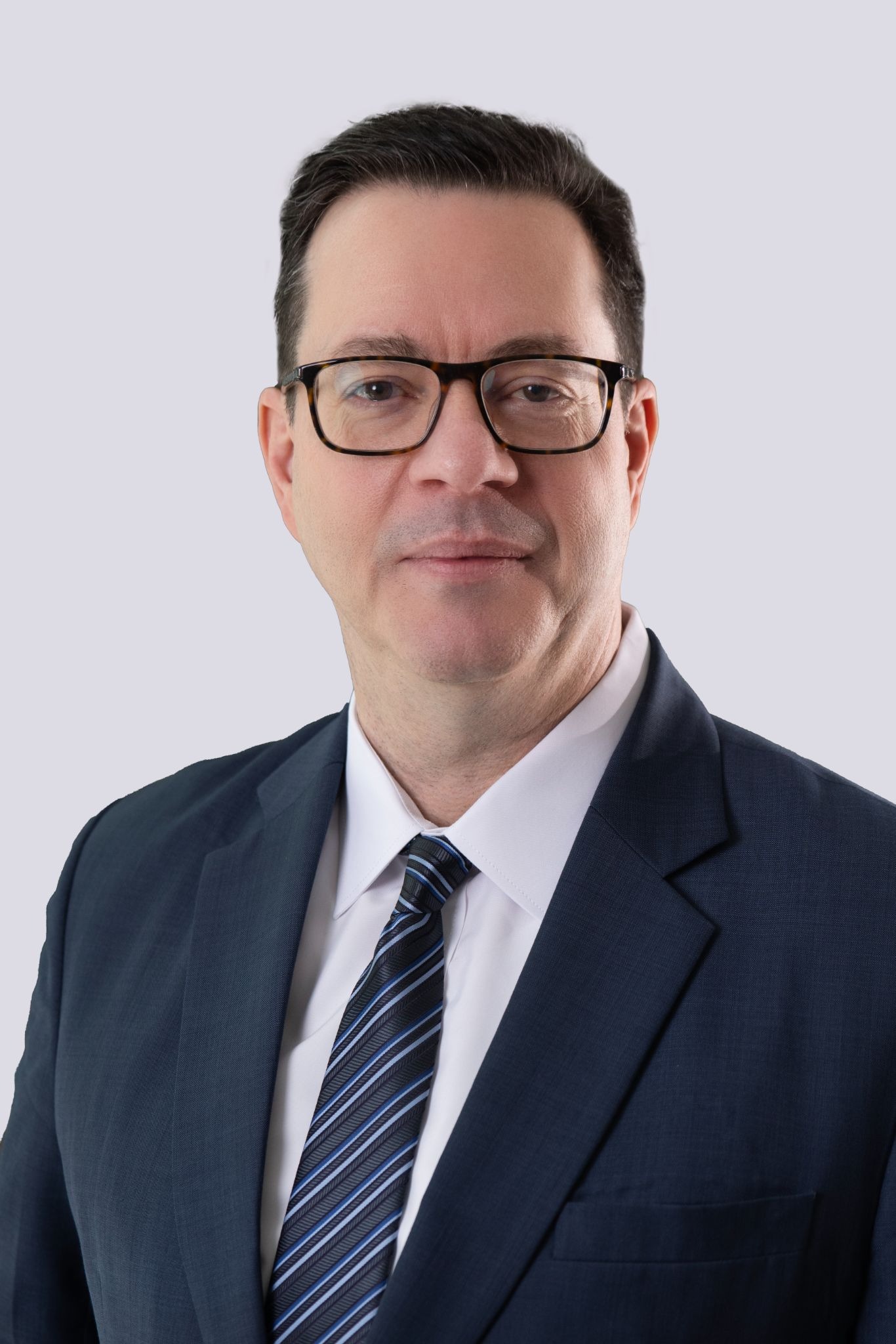
Dr. Glenn Muschert is Professor of Digital Sociology and Associate Chair for Graduate Studies in the Department of Public Health, College of Medicine and Health Sciences at Khalifa University (جامعة خليفة), Abu Dhabi, UAE. He previously served as a faculty member at Miami University and Purdue University (USA) and as a visiting scholar at Erzincan University and Atatürk University (Türkiye). He has served as an advisor to the Abu Dhabi government and several MedTech startup companies. His research focuses on the human use of digital technology, SDGs, and the resolution of social problems. He has published numerous scholarly volumes, peer-reviewed articles, and chapters in academic volumes in sociology, entrepreneurship, media studies, and sustainable development.
Contact Information:
Dr. Glenn Muschert
Professor of Digital Sociology
Associate Chair, Department of Public Health and Epidemiology
College of Medicine and Health Sciences
Khalifa University, PO Box 127788
Abu Dhabi, United Arab Emirates
E-Mail: glenn.muschert@ku.ac.ae
ORCID: https://orcid.org/0000-0003-3748-4961
LinkedIn: https://www.linkedin.com/in/glenn-muschert-1b050b1a0/
16:00 SAST, 10:00 EDT (Time Zone Reference Guide)
Keynote: Dr. Ressa Uli Patrissia
Muhammadiyah Palangkaraya University
Chair: Julie Wiest
Algorithmic Companions and Digital Inequality: AI-Powered Smartwatches and the Social Construction of Everyday Life in Indonesia
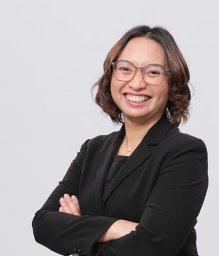
Ressa Uli Patrissia is an academic and researcher in communication studies whose work focuses on digital communication, media ecology, and the socio-technical implications of emerging technologies. Her research explores the intersection of algorithmic systems, public discourse, and audience behaviour, with particular attention to how digital platforms shape meaning-making processes in contemporary society. She has contributed to scholarly discussions on media transformation, digital journalism, and communication ethics in the context of rapidly evolving information environments. Her recent work engages with critical perspectives on artificial intelligence and its influence on communication practices and knowledge production. Ressa has presented her research at national and international forums and continues to develop interdisciplinary approaches bridging communication theory and technology studies.
17:00 SAST, 11:00 EDT (Time Zone Reference Guide)
Panel: Digital Publics
Chair: Julie Wiest
Triantafyllos Gkaragkanis
Navigating the Mediterranean Border: Digital Imaginaries and Resistances among African and Middle Eastern Refugees in Greece
Maren Beaufort
How Information Users’ Democratic Understandings Shape the Conditions of Communicative Equality
Kenneth C. C. Yang and Yowei Kang
Will AI Image Analysis Tool Biases Mediate Proxy Geopolitical Framing Effects on Image Representations of the Palestinian-Israeli Conflict?
Weile (Wendy) Zhou
Infrastructural In-Betweenness: AI Adoption and Platform Dependencies of Chinese Diaspora Journalism
18:00 SAST, 12:00 Noon EDT (Time Zone Reference Guide)
Chair: Jeremy Schulz
Panel: Labor and Professions in the Digital Age
Momna Rani
Communication Disparities, Empowerment, and Worker Exhaustion in Long-Term Care
Zepeng Zhou and Timothy J. Dowd
Pricing Influence: Gender and Valuation Inequality in China’s Creator Economy
Heloisa Pait
So Much in a Single Sentence! Teaching college students in Brazil in the Era of Automatic Text Generators
Diana Papademas
Civil Society, Higher Education, and the UN Global Contexts: Mediated Goals
19:00 SAST, 13:00 EDT (Time Zone Reference Guide)
Keynote: Dr. Noel Packard
University of Auckland, Film, Television and Media Studies
Chair: Katia Moles
Making Internet History More Visible
Noel Packard
I study the history of the networks; how they were tested, distributed and commercialized into the Internet. I narrate this through the theories of Max Weber, Karl Marx, and Norbert Wiener. I arrived at this line of research by studying the history of collective memory literature. I studied how memory, as a human activity, transformed into print resources and then into electronic (non-tangible) collective memory. Today we trust electronics with our collective memory, pay for it with our money and personal information, to re-use our collective memory in rented electronic form. How did we get here and why? I study this and advocate for differentiating Internet history to understand how problems we have with today’s Internet have roots in Cold War military networks that became our Internet. My presentation discusses how the Cold War networks were built to serve the military-industrial-complex first and still do through our commercial Internet.

20:00 SAST, 14:00 EDT (Time Zone Reference Guide)
ESMC Plenary
Chair: Jeremy Schulz
Plenary:
Communicating Change: Civic Innovation and Social Movements
Sponsored by Emerald Studies in Media and Communications
Markus S. Schulz
Max Weber Center for Advanced Cultural and Social Studies
Communicating Change: Civic Innovation and Social Movements
Ligia Tavera Fenollosa
Facultad Latinoamericana de Ciencias Sociales, FLACSO, Mexico City
Crisis Response, Civic Innovation, and Digital Media: Learning from an Earthquake in Mexico City
Paola Rebughini
University of Milan
Critical Agency and Creative Imagination: Snapshots of the Future in Youth Movements
Markus S. SCHULZ is a researcher at the Max Weber Center for Advanced Cultural and Social Studies and the New School for Social Research. A passionate teacher, he taught in various disciplines on both sides of the Atlantic, including Bauhaus University Weimar (media studies), CUNY (urban studies), NYU (Latin American studies), Virginia Tech (global studies), and University of Illinois at Urbana-Champaign (sociology). Schulz earned his PhD from the New School for Social Research, after studies of philosophy and social sciences at the Freie and Humboldt Universities in Berlin. Professor Schulz has published widely, including many books and articles on digital media, contentious politics, social movements, and future imagination. Schulz won for his work national and international recognition, including the ISA Bielefeld Prize for the Internationalization of Sociology, the Candace Rogers Prize of the Eastern Sociological Society, the Elise Boulding Prize, the World Society Foundation Award, and an honors degree from the Collegium of Peruvian Sociologists. Schulz served as Vice President for Research of the International Sociological Association and President of the Third ISA Sociology Forum. WebForum on the Futures We Want: http://futureswewant.net.
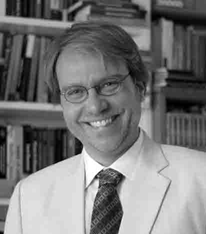
Ligia TAVERA-FENOLLOSA is a sociologist specializing in collective action and social movements. She earned her PhD in Sociology from Yale University and is currently a full-time professor at the Facultad Latinoamericana de Ciencias Sociales (FLACSO) in Mexico City. She is president of the Mexican Network for Social Movements Studies. Her research focuses on both contentious and non-contentious collective action, exploring its role in social, cultural, and political change, the pursuit of social justice, and the empowerment of civil society. Among her publications in English are: “Eventful Temporality and the Unintended Outcomes of Mexico’s Earthquake Victims Movement” (in: Social Movement Dynamics: New Perspectives on Theory and Research from Latin America Rossi, ed. By Rossi and von Bülow, Routledge, 2016); “Protest Artifacts in the Mexican Social Movement Sector: Reflections on the “Stepchild” of Cultural Analysis” (w. Hank Johnston, in: Handbook of Social Movements Across Latin America, ed. by Almeida and Cordero, Springer 2015); “The movimiento de damnificados: Democratic Transformation of Citizenry and Government in Mexico City” (in: Subnational Politics and Democratization in Mexico, ed. By Cornelius, Eisenstadt, and Hindley, UCSD Center for US-Mexican Studies, 1999).

Paola REBUGHINI is Full Professor of Sociology of Culture at the Department of Social and Political Studies, University of Milan, Italy. Her research interests lie in social theory and cultural theory, agency, everyday life, cultural aspects of the globalization process, youth mobilizations and young adults’ forms of individualization. On these topics, she has published widely in top peer-reviewed international journals. She is the author of Framing Social Theory: Reassembling the Lexicon of Contemporary Social Sciences (Routledge 2022, edited with E. Colombo); Youth and the Politics of the Present: Coping with Complexity and Ambivalence (Routledge 2019, edited with E. Colombo); Sociology of difference: Gender, Culture, Nature (in Italian) (Carocci 2022); Children of Immigrants in a Globalized World: A Generational Experience (with E. Colombo) (Palgrave-MacMillan, 2012). She is editor of Rassegna Italiana di Sociologia and Co-editor in-chief of Violence: An International Journal. She is currently the director of the PhD school in Sociology and Methodology of Social Research at the University of Milan.
Lidia LO SCHIAVO is a Full Professor at the University of Messina, Italy. Her main research interests revolve around Youth Studies, Sociology of Movements, Social Theory, Sociology of Migrations. She has been invited as a visiting professor at Manchester University and Manchester Metropolitan University. Her recent publications include: Lo Schiavo L., Rebughini P. (2023), Youth Multidimensional Political Activism Between Singularisation and Mutualism: The Case of Up Network, in “Cambio. Rivista sulle Trasformazioni Sociali”, pp. 1-16. Soggettività studentesca, Generazioni, Partecipazione e Condizione giovanile in Italia, Morlacchi, Perugia, 2023 (book); Student Protests against Neoliberal Education Policies in Italy. Three Student Organizations, in Bessant J., Mesinas M. A., Pickard S. (eds) (2021), When Students Protest, Rowman & Littlefield, New York- London: 105-122. Youth Condition, Student Movements, Generations, and Sociological Critique. A Theoretical Discussion Based on a Case Study, “Quaderni di Sociologia”, n. 87, 2021: 187-207.

The 2026 ESMC Plenary highlights Volume 27 of Emerald Studies in Media and Communications, edited by Markus S. Schulz.
Digital technologies from the Internet and social media to artificial intelligence and robotics are reshaping the world. They offer joy, participation, and higher productivity, but they have also brought disruption, alienation, control, oppression, and exacerbated inequalities. This volume explores this ongoing transformation and its social implications between domination and participation. Outcomes at any given time are not taken as predetermined but as results of the decisions by a range of diverse social actors who compete, cooperate, or conflict with one another and can draw on differential access to resources within shifting political-legal frameworks and structural contexts. Scholars of communication, media studies, sociology, political ecology, employment and labor relations, science and technology come together to examine the social shaping of digital futures across different world regions and domains.
Contributing to these fields, the volume highlights the merits of interdisciplinary research and transnational perspectives to illuminate the intricate complexity in which digital technologies are shaped by and are shaping social relations of power between domination and participation. The authors present critical case studies that make timely progress toward a deeper understanding of these new dynamics and toward broadening the horizon for imagining preferable democratic future alternatives.
This volume is sponsored by the International Sociological Association Research Committees on Futures Research (ISARC07), ProFutur, Denkwerk Antizipative Demokratie, and Initiative for Transnational Futures (ITF).
See: Communicating Change: Civic Innovation and Social Movements
And: Communicating Change
21:00 SAST, 15:00 EDT (Time Zone Reference Guide)
Panel: Social and Tech Ethics: Emerging Tensions
Chair: Katia Moles
Seonwoo Bak
Communicating Restoration: Organizational and Individual Logics of Urban Nature in the Digital Age
Arti Sardessai
Media, Inequality, and the Communication of Genetic Risk: Newspaper Coverage of Predictive Genetic Testing in India
Alex Symons and Kenneth Kambara
South African YouTube: Local Voices within a Western Platform Infrastructure
Noel Packard
Internet Legislatively Built Biased
22:00 SAST, 16:00 EDT (Time Zone Reference Guide)
Keynote: Professor Matías Dodel
Department of Social Sciences, Universidad Católica del Uruguay (UCU)
Chair: Katia Moles
Disentangling love from age in the digital world: a quasi-experimental approach to Age–Period–Cohort in online couple formation
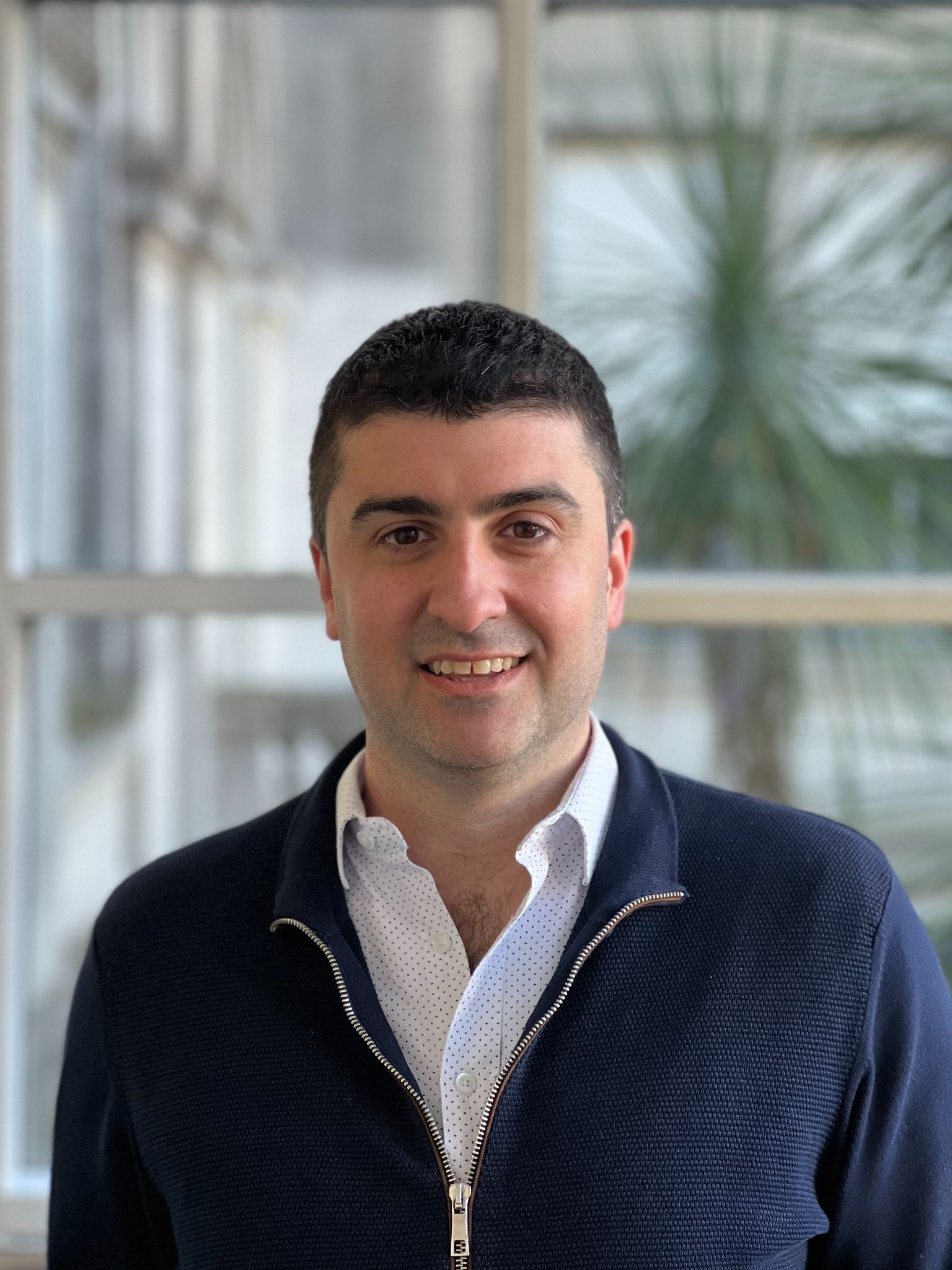
Matías Dodel is a sociologist (Ph.D.) and psychologist specializing in digital inequality, media effects, and public policy. He is a Full Professor in the Department of Social Sciences at the Universidad Católica del Uruguay (UCU), where he also leads the Uruguay chapters of the DiSTO Project and Global Kids Online. He has worked as an independent consultant for the Uruguayan E-Government Agency, UNICEF, and ECLAC, among others. His work has been published in Telecommunications Policy, Computers in Human Behavior, Information, Communication & Society, Journal of Children and Media, and Policy & Internet, among other outlets.
E-Mail: matias.dodel@ucu.edu.uy
Personal website: https://sites.google.com/view/matiasdodel/
ORCID: https://orcid.org/0000-0002-1724-9609
LinkedIn: https://www.linkedin.com/in/matiasdodel/
23:00 SAST, 17:00 EDT (Time Zone Reference Guide)
Keynote Encore Events
Team SCU
22:00 SAST, 17:00, & 2:00 PM PDT EDT (Time Zone Reference Guide)
Encore Events: Team SCU
Afternoon Opening Remarks : Laura Robinson, Series Co-Editor
On behalf of Katy Mathers, Emerald Publishing” “Emerald Publishing is pleased to support the ICA 2026 Media Sociology Postconference, Media Sociology: Inequalities in Emergent Global Contexts. The themes of this event closely align with the mission of our Studies in Media and Communications series, which showcases interdisciplinary and global research on the social, cultural and political dimensions of media. This postconference highlights the urgency of understanding how inequalities are produced, mediated, and challenged within rapidly changing global environments, and Emerald is committed to providing a platform for these conversations within media sociology. We look forward to the insights generated here and to continuing to support this important scholarly community.”
Thank you for joining us!
June 10th 2:00 SAST, June 9th 20:00 EDT (Time Zone Reference Guide)
Panel: Tech Agency
Chair: Laura Robinson
Hiroshi Ono and Takeshi Mori
When Less is More: Digital Tools, Autonomy and Job Satisfaction in the Japanese Workplace
Yanling Zhu
Between Diplomacy and Entertainment: How the International Influencers’ Culture Influences Digital Regulation Across China’s Social Media
Li Jiajing
Epistemic Inequalities in Climate Communication: Framing Indigenous Knowledge in Western and Global South News Media
Aarzoo Sharma, Paramveer Singh, Vachaspati Dubey, and Sujata Behera
GenAI and Digital Inequality: Cultural and Literacy Challenges among Social Media Users
June 10th 3:00 SAST, June 9th 21:00 EDT (Time Zone Reference Guide)
Panel: Gaming, Sports, and Leisure
Chair: Poiema Dai
Yaoru Zheng
Breaking the Taboo: Female Athletes, Menstruation, and the Olympic Arena (2016–2026)
George Ran Zhao
Gray-Market, Pirated, Imported, and Licensed Consoles: A Social History of Japanese Nintendo Consoles in China
Jijun Jiang
To Be Seen or to Be Safe: Digital Withdrawal Under Conditions of Surveillance Risk
June 10th 2:00 SAST, June 9th 20:00 EDT, & 5:00 PM PDT (Time Zone Reference Guide)
Panel: Tech Agency
Chair: Katia Moles
Hiroshi Ono and Takeshi Mori
When Less is More: Digital Tools, Autonomy and Job Satisfaction in the Japanese Workplace
Li Jiajing
Epistemic Inequalities in Climate Communication: Framing Indigenous Knowledge in Western and Global South News Media
Aarzoo Sharma, Paramveer Singh, Vachaspati Dubey, and Sujata Behera
GenAI and Digital Inequality: Cultural and Literacy Challenges among Social Media Users
Yanling Zhu
June 10th 3:00 SAST, June 9th 21:00 EDT, & 6:00 PM PDT (Time Zone Reference Guide)
Panel: Competition, Coercion, and Consensus
Chair: Poiema Dai
Jijun Jiang
To Be Seen or to Be Safe: Digital Withdrawal Under Conditions of Surveillance Risk
Yaoru Zheng
Breaking the Taboo: Female Athletes, Menstruation, and the Olympic Arena (2016–2026)
George Ran Zhao
Gray-Market, Pirated, Imported, and Licensed Consoles: A Social History of Japanese Nintendo Consoles in China
June 10th 4:00 SAST, June 9th 22:00 EDT, & 7:00 PM PDT (Time Zone Reference Guide)
Closing Session: Digital Divides and Divisions
Co-Chairs: Eva Hernandez and Christina Dai
Vachaspati Dubey, Paramveer Singh, Aarzoo, Sujata Behera
Disconnected in a Connected World: Examining Digital Media Literacy Among Farmers in Jammu, India
Sanobar Nadir
How AI Shapes Communication and Digital Participation for ESL Users Across Languages
Dazzelyn ZAPATA
The Ili Navigates the Grid: Longitudinal Look at the Digital Experiences of Three Indigenous Igorot Villages
Sujata Behera, Paramveer Singh, Aarzoo, and Vachaspati Dubey
Health Communication Inequality among Rural Women in the Digital Age: Assessing Rural Access to Online Health Information
Event Leadership
The event is possible thanks to the service of Co-Organizers: Laura Robinson, Jeremy Schulz, and Julie Wiest; members of the Global Advisory Board Grant Blank, Wenhong Chen, Kenneth Kambara, Muyang Li, Zhifan Luo, Noah McClain, Massimo Ragnedda, Maria Laura Ruiu, and Juliana Trammel; and Student Mentor Team Leader Katia Moles to support team members Cristina Dai, Poiema Dai, and Eva Hernandez (all names in alphabetical order).
Questions or need help?
Email mediasociologysymposium@gmail.com.

2025 ICA Media Sociology Postconference: Tuesday June 17, 2025
Theorizing Disruption and Consolidation in Media Sociology: Youth, News, Inequities, & Politics hosted by the University of Denver and Sponsored by the ICA GCSC Global Communication and Social Change.
2025 Link to Full Program & Zoom Webinar
Sponsors
Registration was free thanks to our sponsors ICA GCSC Global Communication and Social Change, University of Denver, UT Austin, West Chester University, Santa Clara University, and Emerald Studies in Media & Communications
Event Leadership
The event is possible thanks to the service of Co-Organizers: Laura Robinson, Jeremy Schulz, and Julie Wiest, as well as members of the Global Advisory Board Grant Blank, Wenhong Chen, Kenneth Kambara, Muyang Li, Zhifan Luo, Noah McClain, Massimo Ragnedda, Maria Laura Ruiu, and Juliana Trammel; and Student Team Mentor Katia Moles who supported students including Christina Dai, Poiema Dai, Ryan Pool, and Morgan Vodzak (all names in alphabetical order).
Local Organizers and Support Team
The event was possible thanks to the service of local hosts at the University of Denver: Professor Lynn Schofield Clark and Associate Professor Erika Polson from the Department of Media, Film & Journalism Studies.
Questions? Email mediasociologysymposium@gmail.com
Keynote Speakers Speakers (in alphabetical order)
Pablo J. Boczkowski, Northwestern University
Pablo J. Boczkowski has doctorates in Clinical Psychology (Universidad de Belgrano, 1994) and Science and Technology Studies (Cornell University, 2001). He completed a four-year interdisciplinary residency in mental health at the Alvear Hospital in Buenos Aires, Argentina, before moving to the United States to retrain in S&TS. He was an assistant professor at MIT from 2001 until 2005, and since then has been at Northwestern University, with a primary appointment in the Department of Communication Studies. His research program examines digital culture from a comparative perspective, with a special focus on Latin America and Latinx USA. Boczkowski’s publication record includes seven books—with an eighth one forthcoming later this year—five edited volumes, and more than sixty journal articles.
Svetlana S. Bodrunova, St. Petersburg State University
Svetlana S. Bodrunova currently works at School of Journalism and Mass Communications, St. Petersburg State University, Russia. Svetlana does research in computational communication science, human-computer interaction, social media and inter-ethnic conflicts, and Russian media and public sphere. She has authored and co-authored over 150 academic works and leads the Center for International Media Research at her School. She serves on editorial boards of four international communications journals.
Heloisa Pait, São Paulo State University
Heloisa Pait, a Fulbright alumna, teaches sociology at the São Paulo State University Julio de Mesquita Filho. She has taught in Brazilian and American universities and investigates the role of new means of communication in democratic life.
Maria Laura Ruiu, American University of Sharjah
Maria Laura Ruiu (PhD) is an Assistant Professor of Media at the American University of Sharjah, UAE. Her research spans environmental and media sociology, with a particular focus on environmental communication, social capital, and digital media. Her recent book on Digital-Environmental Poverty explores the need to redefine poverty in the digital age by integrating environmental and technological dimensions.
Jeremy Schulz, UC Berkeley
Jeremy Schulz’s current research focuses on digital inequality and work and wealth among economic elites. He has also done research and published in several other areas, including digital sociology, sociological theory, qualitative research methods, work and family, and consumption. His article, “Zoning the Evening,” is published in Qualitative Sociology and received the Shils-Coleman Award from the ASA Theory Section. Other publications include “Talk of Work” published in Theory and Society and “Shifting Grounds and Evolving Battlegrounds,” published in the American Journal of Cultural Sociology. Since earning his PhD at UC Berkeley he has held an NSF-funded postdoctoral fellowship at Cornell University.


